
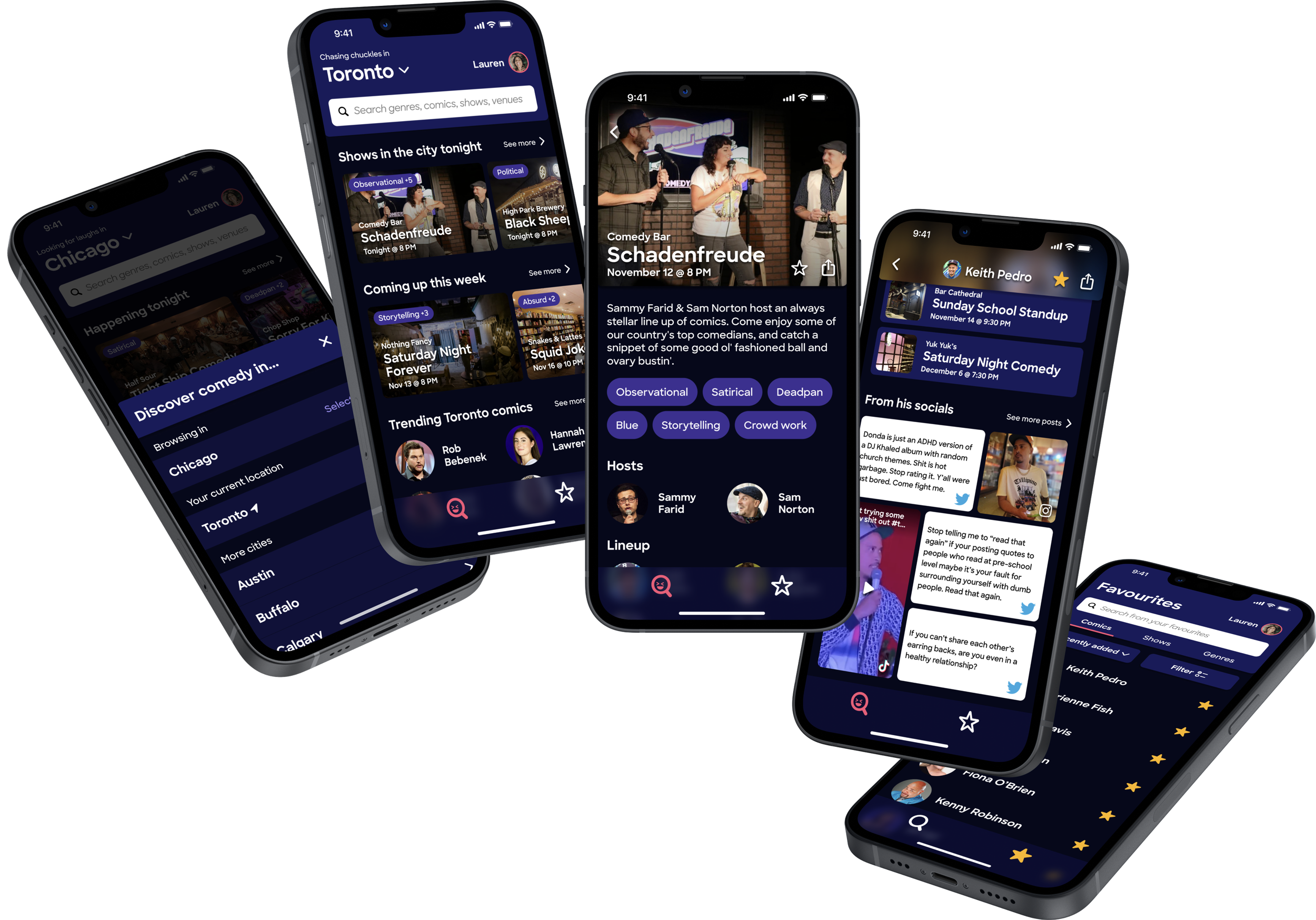
A platform that allows live comedy fans to navigate and explore their local stand-up scene, while simultaneously providing increased targeted exposure for comedians, shows, and venues.
Project Type Academic
Duration 10 weeks
Role End-to-end UX/UI Research & Design
Tools

Throughout the course of this case study, I followed the Double Diamond design model — a process consisting of four diverging and converging steps that cover a design project from end-to-end throughout research and design.
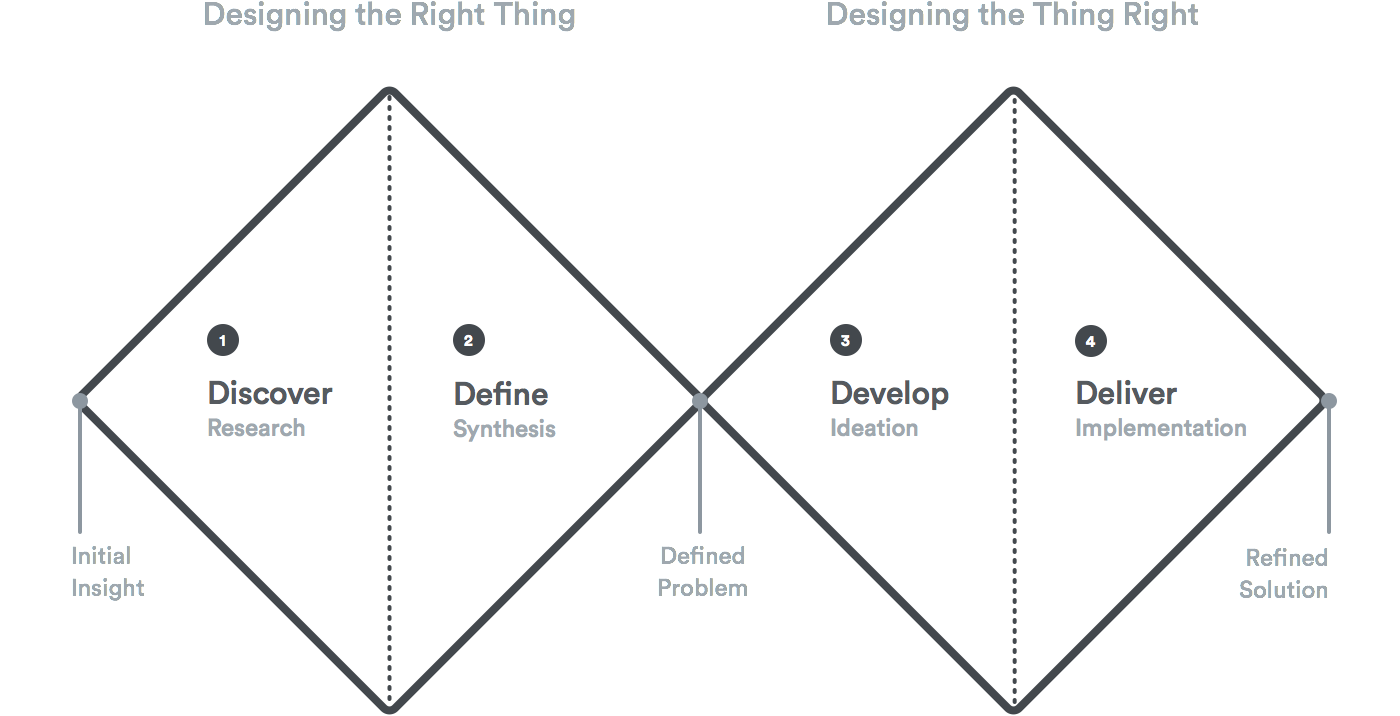
Here’s a breakdown of all the steps I took as I carried out my solution design.
| Discover | Define | Develop | Deliver |
|---|---|---|---|
| Problem Space | |||
| Hypothesis | |||
| Research | |||
| Insights & Themes | |||
| How Might We? | Persona | ||
| Experience Map | |||
| User Stories | |||
| Task Flows | Sketches | ||
| Wireframes | |||
| Prototype | |||
| User Testing | |||
| Iterating | Branding | ||
| Visual Identity | |||
| Marketing |
It is notoriously difficult for novice stand up comics to build a following. Very few comedians ever experience a high level of success and they are paid very little to perform, which can drastically hinder their motivation to continue.
While other entertainment acts such as musicians and bands have plenty of specialized digital resources for discovery to help them connect with fans, comics have to rely solely on social media platforms and grassroots marketing, which can be extremely tedious.
Based on this problem space, I set out to get to the root of the issue and aimed my sights on helping to enable comedians to find and connect more directly with their audience. My design challenge in the form of a ‘how might we? question’ was as follows:

The hypothesis that I led my research with was that I believe that designing a digital product to provide improvements for the live comedy industry will allow both comedians and comedy fans to benefit. There are plenty of incongruencies with the live comedy scene compared to other forms of entertainment, which all parties involved deserve to have alleviated.
I will know that this is true when I hear feedback from comics and fans regarding better crowd turnouts and engagement, as well as more enjoyable experiences at live shows, as a result of my solution.
Starting things off with some secondary research, I dove into articles and research studies around stand-up, comedy-related income growth for stand-up comics, and a comedian’s overall propensity to maintain a viable stand-up career. These were some of the main figures that stood out to me, and started to validate my thinking about introducing some more digital intervention in the space.